 Ah, that feeling when you make the last edit, tweak the last audio level, hit ‘render’ on your video file…
I love that moment when I know I have finished my film. It’s something I’m eager to show to the world. There’s nothing left hanging. It’s the last time I fire up the project in my editing program.
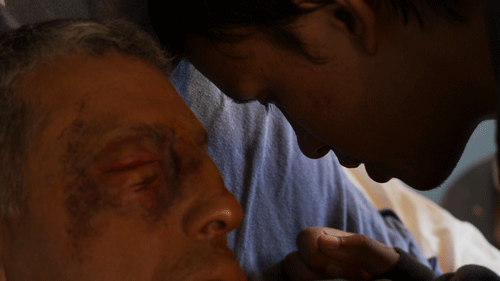
Actually, it’s hard for me to see that moment clearly. As a filmmaker who has his hands in the minutia of my films, that moment is actually really blurry. I may not even see it until it’s history. In the case of “Street Language” my new short, I’m the guy who wrote the script, did much of the production management, directed the film, and have been completing the post-production after a friend did the rough cut for me. Some pieces are really put to bed: script, acting, the picture cut, even the music at this point. But, because I’m a slightly obsessed filmmaker–I call it ‘high standards’–and because I have the whole film sitting on my own hard drives that I can fire up anytime a thought strikes me, this film seems to be inching slowly toward being really “done”.
I think this is a common malady among indie filmmakers. I know I will see something on every viewing that strikes me as odd, something that needs a little smoothing, a lingering doubt about a creative choice I’ve made. I know I’ve been over the film to the sub-frame level in many parts. Some choices are ones I’ve examined many times and come to the same conclusion. And I know that there are no perfect films–to the filmmaker. Look at George Lucas, causing a ruckus because he’s still tweaking Star Wars, after over 30 years!
If George does it, maybe I shouldn’t feel guilty. I know other filmmakers who walk away and don’t look back; and sometimes I think they should have.
I am really happy with this film. Preview audiences have loved it. My wife cried at the right time when I showed it to her (and doesn’t think I’ve wasted my time and our money making it.)
I know I’ll walk away and be done with it, soon. I’ve finished hundreds of projects in my career. But when you’re in this stage, just after all of the really heavy lifting is done, but before it’s set loose on the world, there is a little season of hesitation, button pushing, and oh-so-close satisfaction.
 MindSoulStory