“THE SCENE MUST BE DRAMATIC”

It takes an immense amount of discipline to resist spoon-feeding your audience. And it takes the same discipline to solve story problems by writing only dramatic scenes, not expositional scenes.

I read a post that talks about this topic this week on Go Into The Story, one of my current favorite blogs. Scott Myers collects an amazing variety of great screenwriting tips, scene analysis from famous films, and general wisdom from great screenwriters.

In this post, Scott re-posts a letter from David Mamet (if you don’t know him, you should find his stuff) that was written to his writing team for a television series Mamet was writing a few years ago. In the letter (there is some colorful language – it’s Mamet) he exhorts his writing team to be disciplined to write scenes and dialogue that serve to move the story forward dramatically.

It’s the bane of every writer to have to deal with collaborators (not the word Mamet uses to describe the network executives) who make suggestions. Often the suggestions (or orders) come in form of a request to make the story more clear, fill in blanks, flesh out characters, etc. And, too often, this results in dreaded exposition speeches by characters or the inane dialogue that spells out what the audience probably already knows and would enjoy discovering for themselves. Mamet colorfully outlines his criteria for what needs to happen in a scene for it to be worthy to remain in a script.

Go Into The Story: “THE SCENE MUST BE DRAMATIC”.

Film Essentials: Rube Goldberg Machines

I have to say I have a weakness for what are commonly known as “Rube Goldberg” machines. The name refers to an American comic artist who created crazy contraptions to do ordinary things. Here is the official Rube Goldberg web site, if you’re really interested.

Of course, there is the wildly popular music video (8 million + views on YouTube as of this month) by OK Go, “This Too Shall Pass” which is based entirely on a Rube Goldberg machine that provides the visual thread for the song. I like the way it gets bigger and more out of control as the song progresses. And it must be fun to destroy pianos, TVs, etc. It lost some of the purity of the machine as it got more crazy; you lost some of the actual mechanical connection and they could have faked lots of it if they wanted to. This is just one recent example.

I also loved the Honda Accord commercial from 2003. While not as wild as the OK Go video, it has a more pristine, controlled, elegant feel to me. When I saw it for the first time, I was blown away. Wikipedia has a complete description of the commercial, its production, and impact for Honda. 606 takes over 4 days to complete; that’s insanity.

There’s a cool parody of the Honda spot, just for fun.

The Newtons' Workshop DVD

The ones I’ve seen tend to be in commercials or music videos, but what about such machines in narrative films. I cant remember one off-hand. I wrote a Rube Goldberg machine into a script I did back in 1996 or so. It was for an educational video series I wrote and directed for Moody Video called, The Newtons’ Workshop. The main character was an eccentric inventor or sorts, with a passion to teach his grandkids about science. My production designer had a fun time constructing a mail delivery system for Grandpa’s house. We were not skilled, well financed, or patient to make it all work perfectly in real life, so we used creative edits to make Grandpa’s machine work on film. I don’t have a clip, but I’ll post it sometime when I can get it digitized.

Anatomy of a Scene: Mother – Interactive Feature

Watch a short clip from a film with the Director’s commentary. In this case, South Korean filmmaker Bong Joon-Ho’s “Mother”. I love these NYTimes interactive features. I think they really take advantage of the potential for electronic publishing, especially for cool things like film analysis.

Click here to watch and listen: Anatomy of a Scene: Mother – Interactive Feature – NYTimes.com.

Of course, this is a film that almost nobody has seen, but I like the way the director tells the story and builds the tension in creative ways with interesting camera angles and pacing. What do you think?

How Can Games Speak To Us?

I believe that visual storytelling is about entertainment, but not merely entertainment when it reaches its highest level. I want to tells stories that open audiences’ eyes and hearts.

In my on-going ponderings about visual storytelling, I really believe that I’ll be working on video games in the future – even though I’m a filmmaker by trade.

My son is a budding game developer and we have discussions all the time about the place of storytelling in games. I challenge him to think in terms that are beyond the current state-of-the-art. What could be done in terms of meaning and cultural influence in a game? I have a friend in the major game world who says the development studios are looking to Hollywood for screenwriters who can help them amp up the characters and story arcs of their games. If you read reviews of games like Mass Effect 2, you know that there is a real effort being made in some games to create more depth and nuance beyond a few cut scenes that move a player through to the next battle.

Mass Effect 2

However, when I think story and when my son talks about story in games, there is still a wide difference. Mass Effect 2, for instance, uses a dialogue wheel to give a sense of choice and independence to conversations, but you don’t mistake the game for anything written by Robert Towne.

When will we get there?

Chris Remo talks about it in this article.

If you’re reading this, you probably love games. I certainly do, but I’ve been thinking about what makes games important to me, versus what makes books or music or film important to me.

… there are still some parts of my life that games don’t address that well. They do the “fun” thing well, and they give me a lot to think about, but they rarely speak to me the same way a wonderful novel, film, or album does.

…the reason I bring this up is because I think games are certainly capable of more. I think games have the possibility of speaking to us as people, not just as gamers, in the same way a film by Scorsese or Bergman or Welles or Kurosawa or the Coen brothers can speak to us as people, not just as film buffs; in the same way The Beatles or Beethoven or Charles Mingus or the Flaming Lips or John Adams speak to us as people, not just as analysts of music theory; in the same way Vonnegut or Nabokov or Shakespeare or Orwell or Hammett speak to us as people, not just as appreciators of literary prowess.

[Read the entire post from IdleThumbs]

I believe that visual storytelling is about entertainment, but not merely entertainment when it reaches its highest level. I want to make films, and perhaps games, that open audiences’ eyes and hearts. When the master storyteller, Jesus, explained why he told stories he said, “…to nudge people toward receptive insight.” When I think about the potential of games, with open worlds and personal participation in the story, I am excited to see what’s possible.

“Blockbusting” – Must-read book for filmmakers

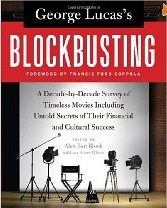
Just from the cover you sense the significance. George Lucas, Francis Ford Coppola, Stephen Spielberg, Martin Scorsese, Walter Murch, Ron Howard, and Sid Ganis all have their names and/or blurbs on the cover.

Just from the cover you sense the significance. George Lucas, Francis Ford Coppola, Stephen Spielberg, Martin Scorsese, Walter Murch, Ron Howard, and Sid Ganis all have their names and/or blurbs on the cover. It’s called George Lucas’s Blockbusting, and if you are a filmmaker or film fan, I’d recommend this book as one that you must have and must read.

Bockbusting: A decade-by-decade survey of timeless movies including untold secrets of their financial and cultural success.

I discovered this book as I was browsing at new releases in a local bookstore and I’m surprised I hadn’t heard of it yet. But, as I’m writing, Amazon doesn’t yet have it in stock.

As the tag says, the book takes a look at the movie business, centered in Hollywood, from a variety of perspectives. It begins with a listing of the Top 300 films by Domestic Box Office between 1910 and 2005. The list is adjusted for inflation to 2005 dollars so you get a clearer picture of success relative through the decades. Based primarily on this list, the book takes you through the movie business beginning with the invention of the motion picture and disputes over patents in the early 1900’s.

In each decade, the most important films are featured in brief synopses that include background on how the films were made and how they were received, as well as their statistics like production budget, # days of principal photography, key credits and locations, and box office revenues. The films highlighted for each decade are include films that are not in the all time Top 300 domestic grossing films, but also include films from that decade that are significant for other reasons. Each film has a story behind it that is fascinating to hear – the intrigues behind the financing, studio squabbles over stars, reticent directors and writers.

If you’ve seen collections of film synopses before, this is not entirely new. However, packed into this book are articles and tables that give a hundred other ways to consider films, their success, and their cultural impact. For instance, there are salary comparisons for top actors and directors, again adjusted for inflation in each decade. They even throw in a table that shows average income tax rates for different eras. That way you can tell whether Spencer Tracy was doing well vs Will Smith in his day. Want to compare how movie franchises fare? There are charts for series like Indiana Jones, Batman, Die Hard, Back To The Future, and Lethal Weapon that track production cost versus box office grosses across the years of each franchise. Want to know average weekly movie attendance and how it compares across the decades, and compare movie ticket prices adjusted for inflation? Those charts are there as well. The book gives a good mix of story and statistics.

There are hundreds of articles that go well beyond the charts and numbers. These tell the story of how the film business began and has been changing through the decades. From the early days of the Motion Picture Patent Company, to the rise and fall of the great studio system (and where the pieces remain), to current trends in distribution, you’ll get more angles on the business side of the movies than you’ve ever seen between two covers.

This book sits on my coffee table and I pick it up several times a week to just browse and learn something new about the business I’m in. Highly Recommend.