Why We Need Poetry

…this is an official thank-you to my friends and those I will never meet, who are poets.

It is difficult
to get the news from poems
yet men die miserably every day
for lack
of what is found there.

– From Asphodel, that Greeny Flower by William Carlos Williams

This quote came from an invitation to subscribe to a poetry magazine. Guess I’m on the right list; it helps me to nurture the image I have of myself as a deep, thoughtful, avant-garde sort of person. And I really do like good poetry.

Poetry seems to me to be even less practical than most other fine arts. If you’re a painter, you can at least do portraits for rich people or, worst case, make a living as a corporate graphic designer while you wait for the world to appreciate your real passion. Dancers can get reality tv shows or teach little girls at the rec center. We filmmakers can hope to work on commercial projects that at least have a semblance of creativity – or else infomercials if we’re desperate – while our indie art film dukes it out for audiences at film festivals in mid-America.

Poets? I guess they have the greeting card industry.

So this is an official thank-you to my friends and those I will never meet, who are poets. I’m trying to teach my kids to love poetry, even if they can’t make a living at it.

Muslim, Christian Artists Journeying Together

The Arts can serve as one of the most effective mediums to build bridges of respect, understanding, sharing and friendship between East and West, Muslims and Christians.

What if we really listened to each others’ stories, saw things through others’ eyes; would it make a difference in the world?

Here’s an encouraging arts festival, beginning Feb 3 in Cairo. I wish I could be there!

Caravan 

Encouraging East and West, Muslims and Christians, to journey together through the Arts

The Arts can serve as one of the most effective mediums to build bridges of respect, understanding, sharing and friendship between East and West, Muslims and Christians. Therefore, Caravan was started by Paul-Gordon Chandler as an informal catalyst to explore and encourage the interplay between Faith and the Arts—and more specifically within the context of interfaith, encouraging Muslims and Christians to journey together through the Arts…thereby seeing the Arts used to facilitate intercultural and inter-religious dialogue.

Check out the web site: Caravan Festival of the Arts

Real News for iPads and Filmmakers?

It goes way beyond guys using iPads to read e-mails, rehearse scripts, and watch demo reels. Here’s how…

I am getting to the point where I yawn when I read another article about how the iPad is taking over some new industry niche. Are there still people for whom it’s news that people in Hollywood are embracing iPads? I guess this article in the NY Times: Pitching Movies or Filming Shows, Hollywood Is Hooked on iPads is still news to some people.

Stephen Elliot, author of "Adderall Diaries" on iPad

Don’t get me wrong, I’m a filmmaker and I love my iPad. But I think the real news goes way beyond guys using iPads to read e-mails, rehearse scripts, and watch demo reels. Another article in the NY Times got me thinking much more about the paradigm shift brought on by mobile devices – and it wasn’t even talking about films. Here’s the article in the NY Times: Blurring the Line Between Apps and Books.

The article describes some new book publishing paradigms that have come out of what I think of as a synergy between e-books and social media. What authors are now able to do is publish their work in apps rather than ‘traditional’ e-book formats. By ‘traditional’, I mean Kindle, Nook, and the like. By making the book an app – a standalone application rather than part of an e-reader library – they are able to connect more solidly with their readers. They can do things like add conversation groups directly to the book in the app, rather than on scattered web sites and blogs. They can connect with reader fans to let them know what they are working on, etc. Especially for authors who write for smaller ‘tribes’ of readers (not the NY Times Bestseller authors) it means they have a way to understand and connect with their readers and vice versa.

For a filmmaker, what’s more exciting, guys reading scripts on iPads, or the potential for filmmakers (like the authors in the second article) distributing their work in a way that gathers a community around them? I was reading the article this morning and imagining a small consortium of filmmakers who produce films of a similar genre – let’s say short thrillers. What if they got together and wrote an app to deliver their films and connect with their audiences? The app gives them connection and control that other on-line delivery methods don’t. Maybe this is happening but I know mostly about the various web communities who are trying this.

Touching Stories from Tool

I did download an app that is a set of short films called: Touching Stories that brings together four short films by a group of filmmakers. Perhaps this is the kind of thing that will become more common. It got some press when it was released earlier this year, but not much. Their shtick is interactive movies. They work OK, but I wasn’t overwhelmed by them to the point I’d want to become a fan or anything. I think some of the filmmakers have real talent, but these films felt like novelties. And, the app didn’t take the important step to gather followers or begin conversation or connection. I think that was a missed opportunity.

What would you do if you could distribute your film as an app rather than merely a download or DVD? What opportunities would that present?

God’s Work in God’s Time | Christian Independent Filmmaking

As a Christian involved in filmmaking, what do I think about success and failure?

[This article was originally posted on HOSFU, a Christian Indie Film site. Unfortunately, that site is now shut down and some of their pages are dead. So I thought I would re-post my article here. It received a lot of comments when I posted it so I think it’s worth throwing into the blogosphere again.]

The question: As a Christian involved in filmmaking, what do I think about success and failure?

God’s Work in God’s Time.

Do you ever find yourself anxious to see the fulfillment of something you feel God has promised? In our particular context as filmmakers, we are part of projects that can be huge, complex, time-consuming, and expensive. Personally, I’m working on a film project that began almost ten years ago and we expect to have impact for twenty more. “The Enemy God” film took us four years of preparation and fundraising, accompanying years of terrible political opposition from a foreign government, the collapse of a well-respected ministry, and then we finally were able to shoot it! Then it was on to post.

I can’t tell you how many times some well-meaning Christian told us that it was obvious to them that God ‘just wasn’t blessing it’ or that ‘if God were in it, the doors would just open’ and our lives would be easy. Over the years, though, we have seen miracles that have matched the obstacles. Now we are distributing the film, and the challenges continue – awards and lots of pats-on-the-back, followed by being flat broke and with a few cold shoulders from people we thought would be the biggest fans.

American Christian culture tends to interpret God’s will by what we term, “open doors.” We all get excited and praise God for amazing stories where an underdog Christian film finds popularity and, even better, box-office success. We tend to say things like ‘God is really blessing this film and we’re seeing lots of fruit from it.” And the converse is also true; if things don’t seem to be progressing, we may interpret it (or be told) that what we are attempting is not His will. If a project doesn’t gain great audience numbers, perhaps God isn’t blessing it. But is this a true way to discern things? In our Christian film community here, what do we think about success and failure?

Here are some thoughts I have had from long years with both in my ministry.

–       Sometimes, things that are in line with God’s will and purposes take more time than we expect. “The Lord is not slow in keeping his promise, as some understand slowness” 1 Peter 3:9. Place yourself in the shoes of a devout Jew during the 400-year period between God’s last spoken prophecies in through the prophet Malachi and the appearance of Jesus the Messiah. You know the promises, are devout in your prayers for Messiah to come, and you believe that is it God’s will to save His people and to draw the nations to Himself. Yet there is a delay – long delay. Many generations die waiting. Do you think others talked a lot of trash about such beliefs? Like Job’s friends, religious people often have religious answers that seem to make sense and to be based in truth about God. However, like Job’s friends, their answers just happen to be wrong.

–       It is possible for Godly people to spiritualize activities that are done mostly by our own power and effort and skill. What I mean is that very talented people are capable of creating impact, even godly impact, without much dependence on God. I’m not about to point fingers or name names, because I understand that it is difficult for me to fully understand my own motivations and the source of the power and skill I try to demonstrate. Sometimes I am fully aware of God’s presence and overwhelming power as He performs tasks through me. Other times, I have to admit that I am not so sure. I believe I am being faithful, but I can lose the clarity about who is accomplishing a task. What’s more, I know I have worked ahead of (or sideways to) God on many occasions. I don’t think I’m the only one who finds this to be true in my life. My conclusion, therefore, is that I will be slow to judge both the “success” and the “failure” of work done in God’s name by my brothers and sisters. I believe it is possible for us to be ‘successful’ by some measures and in God’s name while entirely missing His point or intention. Likewise, it is possible for us to utterly ‘fail’ at something by any reasonable standard and still be doing exactly what God intends. That’s a mind and faith-bender!

–       We can learn from Christians who come from other cultures. Non-western Christians are more patient, in my experience. They are willing to wait, even in the face of overwhelming hurdles and delays, based on their understanding of God’s purposes. Americans, especially, have a culture of achievement and an innate desire to make things happen. It’s in our cultural DNA, inherited in some way from the explorers, pilgrims, and pioneers who have gone before us. We are almost unique in our independent, up-by-the-bootstraps-and-against-all-odds, attitudes. Most other cultures have more of a relational orientation and a value of community rather than the individual. This means they take a longer view and judge by other criteria than individual success in a single activity. They may even look down on individual accomplishment because it is not connected with progress of the community. We Americans have an almost religious aversion to this kind of talk; to say anything against individual initiative and success is certifiably Marxist or worse. Yet, in relational, community-focused cultures that have also embraced the gospel, I have seen and experienced what I would consider a healthy perspective on how the Kingdom moves forward. For them it’s not primarily through the faith and guts and risk and sweat of individuals. It is often by the patient faithful watching and slow, plodding obedience of the community following God together. What we might see as ‘closed doors’ they may explain as just the normal working out of the supernatural conflict that has been in process almost since the beginning of time itself. They take a step back, check on what they know about God, and keep walking forward. They don’t over-analyze or switch paths easily or quickly.

All of these ideas are ones I ponder as I work through my own film ministry here in the US and overseas. I wonder what your experience has been, or what your perspective might be on this subject? Have you experienced any of what I’m talking about?


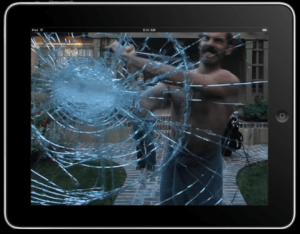
How Mobile Technology is a Game Changer for Developing Africa

I find myself constantly amazed by how technology is permeating even the most remote places on the earth.

I’m think pretty well-traveled, but I find myself constantly amazed by how technology is permeating even the most remote places on the earth. Of course, there are still very isolated cultures, but our image of places like Africa may be way off.

I saw this article the other day that talks about how different organizations are using mobile phone technology for education and development work in Africa. You may be surprised at what they are doing in places that are far from urban tech centers.

Read about it here: How Mobile Technology is a Game Changer for Developing Africa.

Related to this, here’s a link to explain Why I’m Going To Tanzania (leaving today) from an earlier post here on this blog.