Collaboration, Not Charity

I want to learn to give people something to get excited about, to honor their gifts in the best way I’m able, and to help them to feel that they are making a significant contribution with their time and talents.

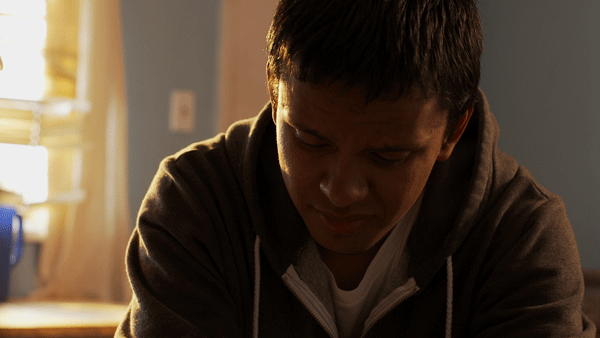
Jacob faces a difficult choice.

I sometimes act like I prefer to be a sort of lone-ranger. I’ve been a filmmaker for almost 30 years and have worked professionally in a variety of production roles.

But really, that’s not what I want. What I really enjoy is the heat of real collaboration with really talented and dedicated teammates. I can get a good deal of the way to a great product with the things I know. But to really make something great, I need help. I want help. I want to work with others who are into excellence, have great attitudes, and are generous with themselves.
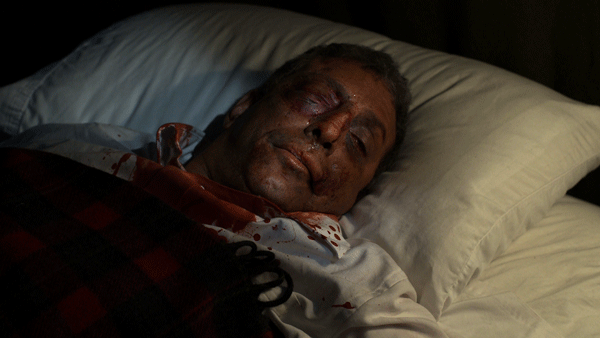
Michael wakes up after a beating, in Jacob's home.

This past weekend I experienced a two great production days on my film, Street Language. I’m the writer and director, and we’re making it for no budget as a mentoring project and as a film to serve inner-city organizations that work with the homeless and at-risk teens. Because we’re making it with no financial resources other than what I can scrape together from my (less-than-explosive) IndieGoGo campaign (Be A Part Of It!) I have worried about how to gather a crew, locations, cast, and all of the other things that go into making a film the right way. (I must be too old to be making films like I’m a starving college student, but that’s kind of what we’re doing, but professionally!)

I have been blessed with a great team, from Chloe Anderson, my Co-Producer, to my DP, Gaffer, on down to my high-school student PAs. They are all volunteers, but they don’t act like it’s we’re a charity case. I have been on many professional sets where people are making real money and I have to say that they don’t run any better than ours. We are working long days in practical locations and everyone acts like it’s their project! You can’t ask for more than that.

I want to continue, even after all these years, to give people something to get excited about, to honor their gifts in the best way I’m able, and to help them to feel that they are making a significant contribution with their time and talents.

Filming again this weekend. Here’s praying for more of the same.
Producer’s Tip: Learn How People Hear Things

As a Producer, you will certainly need to adapt to many different communication methods in order to make your project come off smoothly.

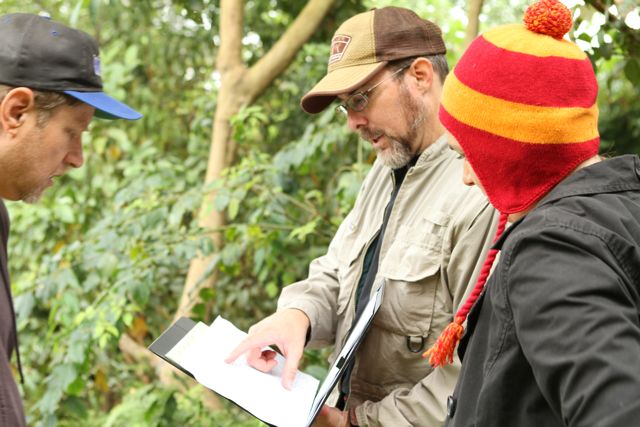
Directing music videos in Africa

Just a quick tip for Producers and those who dream of that lofty position. Don’t assume communication is received, just because you sent it! In the real world of crew members, actors, and businesses, people hear things in different ways. As a Producer, you will certainly need to adapt to many different styles in order to make your project come off smoothly.

For instance, you may be in the habit of communicating almost exclusively via text messages, e-mail, or phone calls. Most people emphasize one of these as their primary mode of communication. On my production team, however, I have to learn how my collaborators prefer to communicate – AND, which methods I can count on to really have them HEAR the message I’m sending.

My rule is; if the conversation is not two-way then you have not communicated. It need not be simultaneous, like in a phone call or face-to-face conversation. But you cannot say you’ve communicated until you hear back from the person. It’s like leaving a phone message; if they don’t respond, it doesn’t count. You can’t say, “I talked with them.”

Never assume what you mean to say has been heard until you get that feedback. And you must learn how different collaborators on your team like to communicate. It’s something I’m constantly working on and learning.

If you don’t like this, try animation and work alone in your basement. 😉

“Street Language” – Sometimes There Is No Negotiating

There are some situations that you can just solve with money; sometimes money doesn’t talk!

I’m in the midst of a creative film production with an all-volunteer cast and crew, a mix of seasoned professionals and students, and locations that are being provided gratis by a variety of business and property owners. [This isn’t all that unusual, but I’m a long way from film school and sometimes wonder whether I should have developed a ‘real’ career by now!]

Our Alley Location - beautiful!

Late last week one of our key locations for “Street Language” fell through. Actually, it became apparent that, for all of our conversations and attempts to ‘lock’ a skid-row motel room for a long day of filming, the manager had decided we weren’t worth the hassle. No way to reserve a room, no guarantee one would be empty, no control whatsoever – so we bailed. There are some situations that you can just solve with money; pay more for the room, rent for a week, etc. Sometimes even money doesn’t talk.

Of course, I was praying hard this weekend!

We are partnering with a great organization Mile High Ministries, who is hot on the project and wants to help. So we got back on the phone to them. They run a transitional housing facility for homeless families called Joshua Station. Yesterday, just before our final production team meeting, we got word that they have a room available for us. Someone just moved out, so it could be a mess. Perfect!

We are really fortunate to have a great crew of volunteers for this project and they are doing their best to keep their commitments to our shooting schedule. It’s a lot to ask of these people who all have other jobs, families, and lives outside of our project. So we are very grateful.

We go into production this coming weekend (Aug 20/21). You can help us make it happen by joining our production team through our IndieGoGo page.

Storytelling: a Dying Art? Screenwriter Barbara Nicolosi

I continue to hammer into my students’ minds the idea that the story is the most important thing, even in a visual/technological artform like cinema.

I continue to hammer into my students’ minds the idea that the story is the most important thing, even in a visual/technological artform like cinema. I have always appreciated Barbara Nicolosi’s thoughts about screenwriting (didn’t know she was Catholic.)

In a very real sense, we need stories to teach us how to live. We enjoy the lessons because stories delight us with their artistry.

From Patheos.com — Storytelling: a Dying Art? Talking with Screenwriter Barbara Nicolosi.