The Enemy God tells the amazing true story of a Yanomamö shaman and the spiritual battle for freedom for his people. If you are in the Toronto area, you won’t want to miss this special event.
The Enemy God tells the amazing true story of a Yanomamö shaman and the spiritual battle for freedom for his people. If you are in the Toronto area, you won’t want to miss this special event. Here’s what ministry leaders have said about the film:
“This is an intense film. It is sometimes graphic; sometimes heart wrenching, but always engaging… expect to experience a perspective you’ve never felt before.” – Doug Lucas, Missions Leader, Team Expansion
“…the point of Shake’s testimony is very clear. Sinful man without Christ is frightening and abhorrent. Evil spirits control him. Jesus Christ brings health, peace, and prosperity, even to isolated people like the Yanomamö.” – Dr. Ted Baehr, Movieguide.org
How do we create a variety of compelling narrative stories while eliminating one of the primary channels of communication, spoken dialogue and narration?
I’m just starting to work with a group in Europe on some short film projects. I was asked to help them hone their skills in making narrative short films. Their goal is to create short films that will stimulate spiritual conversations. Their challenge is that they want their films to be distributed very easily across many countries and language groups. Ideally, they’d tell stories without the use of dialogue that would need to be dubbed or subtitled.
The Red Balloon
So, without resorting to pantomime (a mainstay of youth evangelism in Europe), how do we create a variety of compelling narrative stories while eliminating one of the primary channels of communication, spoken dialogue and narration?
If you do an internet search for “non-verbal film” you will come up with only a few standard reference points, usually films like Koyaanisqatsi, a well-known non-verbal film that is really a sort of visual tone poem, very impressionistic, but very powerful and influential. That film, and others like it, tend to be intentionally, un-structured in terms of story. They intend to be evocative rather than directive in their message.
For our purposes, we would like to be evocative, to be sure, but we also want to tell a story that is understandable. As I’m searching my memory for examples, I’ve come up with The Red Balloon, a film from my childhood that is very well-known. As far as I remember, there is no real dialogue in that film (not that no one speaks at all) and the story is very clear and has deep emotional range. Another film that I’ve thought of is called, The Snowman. You can usually catch it on television during the holidays. Again, it has a strong storyline but no dialogue. Both of these films are classics for many reasons, including their musical scores and, in the case of The Snowman, the amazing animation style.
So I’m thinking through principles that can help us develop some films that are easily understood across a range of language and cultural groups and that do more than present a funny situation or clever visual twist and little else. Most short films I’ve found that have little or no dialogue tend to be this type: jokes, clever situations, or visual experiments that have little story.
I’m working on my principles. I’d be interested to hear what others think, and if you know if examples of films I should watch.
…this is an official thank-you to my friends and those I will never meet, who are poets.
It is difficult to get the news from poems yet men die miserably every day for lack of what is found there.
– From Asphodel, that Greeny Flower by William Carlos Williams
This quote came from an invitation to subscribe to a poetry magazine. Guess I’m on the right list; it helps me to nurture the image I have of myself as a deep, thoughtful, avant-garde sort of person. And I really do like good poetry.
Poetry seems to me to be even less practical than most other fine arts. If you’re a painter, you can at least do portraits for rich people or, worst case, make a living as a corporate graphic designer while you wait for the world to appreciate your real passion. Dancers can get reality tv shows or teach little girls at the rec center. We filmmakers can hope to work on commercial projects that at least have a semblance of creativity – or else infomercials if we’re desperate – while our indie art film dukes it out for audiences at film festivals in mid-America.
Poets? I guess they have the greeting card industry.
So this is an official thank-you to my friends and those I will never meet, who are poets. I’m trying to teach my kids to love poetry, even if they can’t make a living at it.
The Arts can serve as one of the most effective mediums to build bridges of respect, understanding, sharing and friendship between East and West, Muslims and Christians.
What if we really listened to each others’ stories, saw things through others’ eyes; would it make a difference in the world?
Here’s an encouraging arts festival, beginning Feb 3 in Cairo. I wish I could be there!
Caravan
Encouraging East and West, Muslims and Christians, to journey together through the Arts
The Arts can serve as one of the most effective mediums to build bridges of respect, understanding, sharing and friendship between East and West, Muslims and Christians. Therefore, Caravan was started by Paul-Gordon Chandler as an informal catalyst to explore and encourage the interplay between Faith and the Arts—and more specifically within the context of interfaith, encouraging Muslims and Christians to journey together through the Arts…thereby seeing the Arts used to facilitate intercultural and inter-religious dialogue.
It goes way beyond guys using iPads to read e-mails, rehearse scripts, and watch demo reels. Here’s how…
I am getting to the point where I yawn when I read another article about how the iPad is taking over some new industry niche. Are there still people for whom it’s news that people in Hollywood are embracing iPads? I guess this article in the NY Times: Pitching Movies or Filming Shows, Hollywood Is Hooked on iPads is still news to some people.
Stephen Elliot, author of "Adderall Diaries" on iPad
Don’t get me wrong, I’m a filmmaker and I love my iPad. But I think the real news goes way beyond guys using iPads to read e-mails, rehearse scripts, and watch demo reels. Another article in the NY Times got me thinking much more about the paradigm shift brought on by mobile devices – and it wasn’t even talking about films. Here’s the article in the NY Times: Blurring the Line Between Apps and Books.
The article describes some new book publishing paradigms that have come out of what I think of as a synergy between e-books and social media. What authors are now able to do is publish their work in apps rather than ‘traditional’ e-book formats. By ‘traditional’, I mean Kindle, Nook, and the like. By making the book an app – a standalone application rather than part of an e-reader library – they are able to connect more solidly with their readers. They can do things like add conversation groups directly to the book in the app, rather than on scattered web sites and blogs. They can connect with reader fans to let them know what they are working on, etc. Especially for authors who write for smaller ‘tribes’ of readers (not the NY Times Bestseller authors) it means they have a way to understand and connect with their readers and vice versa.
For a filmmaker, what’s more exciting, guys reading scripts on iPads, or the potential for filmmakers (like the authors in the second article) distributing their work in a way that gathers a community around them? I was reading the article this morning and imagining a small consortium of filmmakers who produce films of a similar genre – let’s say short thrillers. What if they got together and wrote an app to deliver their films and connect with their audiences? The app gives them connection and control that other on-line delivery methods don’t. Maybe this is happening but I know mostly about the various web communities who are trying this.
Touching Stories from Tool
I did download an app that is a set of short films called: Touching Stories that brings together four short films by a group of filmmakers. Perhaps this is the kind of thing that will become more common. It got some press when it was released earlier this year, but not much. Their shtick is interactive movies. They work OK, but I wasn’t overwhelmed by them to the point I’d want to become a fan or anything. I think some of the filmmakers have real talent, but these films felt like novelties. And, the app didn’t take the important step to gather followers or begin conversation or connection. I think that was a missed opportunity.
What would you do if you could distribute your film as an app rather than merely a download or DVD? What opportunities would that present?
Can we find the fingerprints of God in the stories of our culture?
There is a great book by Don Richardson called “Eternity In Their Hearts” that talks about the ways every culture has remnants of God’s truth remaining from creation. The book approaches the subject from a point-of-view of cross-cultural missions, but I find that it helps me to think about how my own multi-faceted culture also bears the fingerprints of God in its stories, even if God is rejected on the surface.
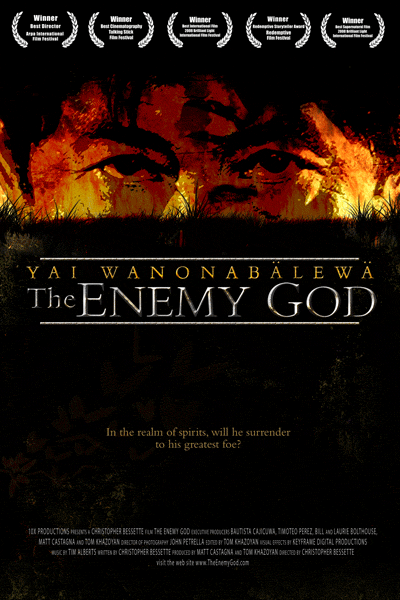
Our film, The Enemy God, tells the story of the Yanomamö people in the Amazon and how there were seeds of truth about God present in their own traditional stories. However, these truths were twisted until they became a curse to the people.
Rather than merely react and shun the creative work of our culture, is it possible to use the stories and myths and passions that we find in Hollywood and independent films to point people to Christ? The article below by Garrett Brown encourages us to look into popular film to see the points of connection, the ways ‘Common Grace’ may be found, as a means to build understanding and relationship. These conversations, in relationship, may be the beginning of a journey to faith, even if the starting point of the story is despair. Perhaps, especially when the story begins with despair?

 We’re please to announce a special screening of our film, The Enemy God, in Toronto on February 19th. That’s next Saturday night. It is hosted by MissionFest Toronto and will be held at Catch The Fire Ministries.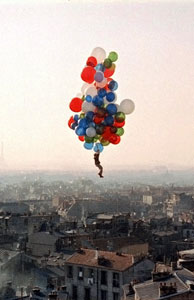

 MindSoulStory