Festival Invitation for The Enemy God

One of our alternate posters

It’s always nice when someone invites you to submit your film to a festival. We have not been submitting The Enemy God since late 2008, but are feeling that some more festival exposure might help get the word out and give us something to talk about! Waiting for distribution deals from our sales agent is an exercise in perseverance.

I got an e-mail today from the First Nations Festival in Montreal, Canada. They are looking for indigenous-themed and/or produced films. We have enjoyed the indigenous festivals we have been in so we thought this sounded like a good opportunity.

Patience, a Gift No One Wants to Earn

Our film just received a great review from a well-known critic. I can’t publish it yet because they’re proofing it and haven’t told us of a release date. But, I want to give just a hint (from a very comprehensive review) here:

THE ENEMY GOD is a low budget but very well made movie. It cares deeply about authenticity and achieves that goal with the set direction, the battle scenes, and the portrayals of the Yanomamö. … The script is powerful… THE ENEMY GOD is much better than most Hollywood movies.

This is one of the great stories. It is a highly recommended movie.

The main reason I’m posting this today is because I have been reminded of the value of patience and persistence. We’ve been working on this film for almost 8 years. That’s crazy! And it will never be a blockbuster commercial success; we know that.

When we got the e-mail with the review today, we passed it on to our Writer/Director, Christopher Bessette. He deserves the accolades. And here’s what he wrote back to me, in part:

You know that you and Matt have made a completely unconventional movie. It is cutting edge because no one has done something like this before. People don’t realize it yet – but the film will have longevity because of it. Like it has been said before they will be looking it up in 200 years in the history books. People don’t realize it now but slowly and eventually it will grow and grow and they will.

Zaven (Katchaturian) from the Arpa Film Festival told me personally that they were considering giving the actors awards but then they began to question as to whether or not they were watching reality or drama.  When they realized it was drama they gave me the award. That was very kind of them… and it is a God thing for sure, but trust me… eventually it will come to pass that greater masses will realize what this means.

Isaiah 55:11 – God’s Word will not return empty but it will accomplish that for which He sent it.

God is with us!

What Christopher’s note reminded me of is that, just because I’m tired of working one more day to make this film a reality, writing more e-mails trying to get attention for the story, Twittering and Facebooking without huge followings, God is working through the film. Matt and I began it with the assumption that it was totally out of our league and was something God needed to do. He did, and continues to make His story known in wider and wider circles, where it is still unknown.

Do we have the patience and perseverance to see things through? Sometimes I think I know when God is saying to just quit something. Other times, I depend on His Spirit to confirm that, even though the breakthrough hasn’t yet come, it doesn’t mean that God has changed His mind.


What You Can Learn from a Tatar Man

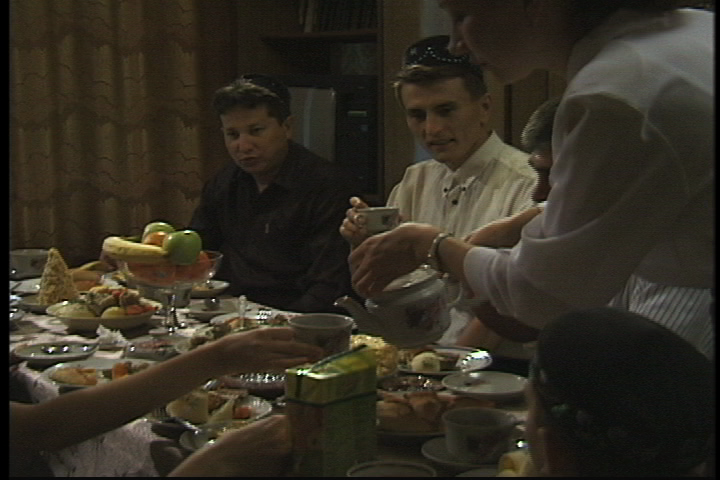
It was the first-ever dramatic film in the Tatar language. In 1998, it showed on state-run television in an Islamic Republic. And it tells the story of a man who grew up an atheist in Soviet times, became a devout Muslim, and then began a search for the forgiveness that he desperately needed. What he discovered in the story of Abraham’s obedience to sacrifice his son brought a radical change, and freedom, to his life.

It was the first-ever dramatic film in the Tatar language. In 1998, it showed on state-run television in an Islamic Republic. And it tells the story of a man who grew up an atheist in Soviet times, became a devout Muslim, and then began a search for the forgiveness he desperately needed. What he discovered in the story of Abraham’s obedience to sacrifice his son brought a radical change, and freedom, to his life.

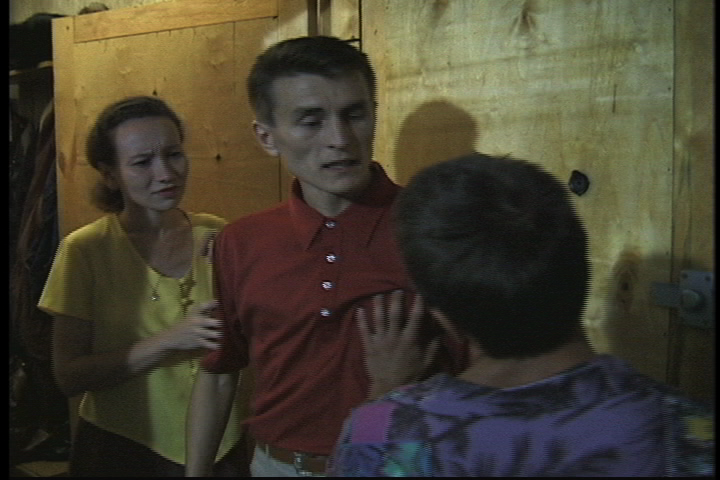
The production of the film, called Korban, was a study in guerilla filmmaking with an eternal focus. With two other filmmakers, I traveled to an Islamic state within Russia to direct the production. It tells the story of a man whose life is an example of how the gospel reaches across cultures and political systems and religions to touch individuals to bring grace, forgiveness, and freedom.

In just a few weeks we re-worked the script in three languages (Russian to English to Russian to Tatar) and we assembled a cast and crew of local folks with no experience in filmmaking or acting. We shot in tiny apartments, in country villages, on city streets, and even in the state government complex with a crowd of extras.

The end result is a 55 minute dramatic film – kind of a Central Asian soap opera, but with better acting. Because it was (and maybe still is) the only film ever produced in the Tatar language, it was a source of pride to the people. Despite the clear message about Jesus, the film was shown on state-run television and has been bootlegged all over the region.

Korban has been sitting on our shelves here since that time, but we have had requests for translations into other languages. We’ve sent off master tapes and told folks to go for it in Farsi. Now, we’re working on an English version that we think will be interesting to folks who want to see the story. Finding a Tatar-speaker who can help us with the translation is a challenge, but we think we have found someone and are on our way to an English release. Stay tuned.

“Blockbusting” – Must-read book for filmmakers

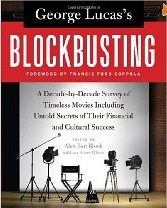
Just from the cover you sense the significance. George Lucas, Francis Ford Coppola, Stephen Spielberg, Martin Scorsese, Walter Murch, Ron Howard, and Sid Ganis all have their names and/or blurbs on the cover.

Just from the cover you sense the significance. George Lucas, Francis Ford Coppola, Stephen Spielberg, Martin Scorsese, Walter Murch, Ron Howard, and Sid Ganis all have their names and/or blurbs on the cover. It’s called George Lucas’s Blockbusting, and if you are a filmmaker or film fan, I’d recommend this book as one that you must have and must read.

Bockbusting: A decade-by-decade survey of timeless movies including untold secrets of their financial and cultural success.

I discovered this book as I was browsing at new releases in a local bookstore and I’m surprised I hadn’t heard of it yet. But, as I’m writing, Amazon doesn’t yet have it in stock.

As the tag says, the book takes a look at the movie business, centered in Hollywood, from a variety of perspectives. It begins with a listing of the Top 300 films by Domestic Box Office between 1910 and 2005. The list is adjusted for inflation to 2005 dollars so you get a clearer picture of success relative through the decades. Based primarily on this list, the book takes you through the movie business beginning with the invention of the motion picture and disputes over patents in the early 1900’s.

In each decade, the most important films are featured in brief synopses that include background on how the films were made and how they were received, as well as their statistics like production budget, # days of principal photography, key credits and locations, and box office revenues. The films highlighted for each decade are include films that are not in the all time Top 300 domestic grossing films, but also include films from that decade that are significant for other reasons. Each film has a story behind it that is fascinating to hear – the intrigues behind the financing, studio squabbles over stars, reticent directors and writers.

If you’ve seen collections of film synopses before, this is not entirely new. However, packed into this book are articles and tables that give a hundred other ways to consider films, their success, and their cultural impact. For instance, there are salary comparisons for top actors and directors, again adjusted for inflation in each decade. They even throw in a table that shows average income tax rates for different eras. That way you can tell whether Spencer Tracy was doing well vs Will Smith in his day. Want to compare how movie franchises fare? There are charts for series like Indiana Jones, Batman, Die Hard, Back To The Future, and Lethal Weapon that track production cost versus box office grosses across the years of each franchise. Want to know average weekly movie attendance and how it compares across the decades, and compare movie ticket prices adjusted for inflation? Those charts are there as well. The book gives a good mix of story and statistics.

There are hundreds of articles that go well beyond the charts and numbers. These tell the story of how the film business began and has been changing through the decades. From the early days of the Motion Picture Patent Company, to the rise and fall of the great studio system (and where the pieces remain), to current trends in distribution, you’ll get more angles on the business side of the movies than you’ve ever seen between two covers.

This book sits on my coffee table and I pick it up several times a week to just browse and learn something new about the business I’m in. Highly Recommend.


Mysteries of AdWords for Indie Film

I have not read a lot of articles on the use of AdWords to promote smaller indie films. I’m sure it is being done, but I’d be interested to hear more about what has worked and what pitfalls may exist.

I have not read a lot of articles on the use of AdWords to promote smaller indie films. I’m sure it is being done, but I’d be interested to hear more about what has worked and what pitfalls may exist.

We have just begun to develop Google AdWords campaigns for our film, The Enemy God. We worked our way through festivals, found a sales agent, and are now working on some hybrid self-distribution. That is, we have sold the worldwide rights to the film but we retained the right to sell DVDs on our own sites. Therefore, we want to build our own, very specific, audiences through targeted marketing – and encourage them to check us out and buy a DVD!

There are a few things that attract me to strategies like AdWords:

  • You are able to target and customize your ads to your unique audience. (If you can’t identify and target a fairly narrow market, you may still have some thinking to do. It’s not wise to try to just say, “My film will appeal to everyone.” You don’t want to be using keywords like, “comedy film”, or “horror”!)
  • You can manage your expenses by establishing your own budget and you only pay for clicks, not impressions. The beauty of this is that you can avoid being stuck with an ad that just doesn’t work. You can tweak and re-shape an ad campaign on-the-fly or just cancel it if it’s not working for you.
  • There are tools to help you figure out if your ad is working: are people coming to the site, which phrases are attracting people, and what pages of your site are most interesting.

Our film is very out-of-the-ordinary, so that helps us in some ways. I have never seen a narrative film like it; we tell an indigenous story from the Amazon rainforest. We are working with keyword phrases that would not normally be used for indie films, such as: indigenous culture, Yanomami, and the names of famous anthropologists who are connected with the tribe. You can’t do that with a suburban romantic comedy or thriller; I think it’s a more difficult challenge to come up with unique keywords to help promote a more mainstream film. We are hoping that we can take advantage of our out-of-the-ordinary themes to help target ads to folks who might be interested in our film.

We’re only beginning to get enough data to get a good sense of what’s working and what’s not and are thinking of how to tweak ads, landing pages of our web site, messages on the site, etc. to help folks who do click on the ad to ‘stick’ with us in some significant way. We want to develop true fans as well as sell DVDs.

I’ll post again with examples of results we are seeing and what we seem to be doing right and wrong.

“The Enemy God” in India

We got our 1st peek today at The Enemy God film’s web site for its release in India. It will be live in 5 languages! Almost ready for public consumption.

Our distributor is working on language translations of the film for this release and others in Korea, Singapore, Malaysia, and Scandinavian countries.

You can get your copy today on DVD (shameless plug!) if you click HERE.