Films With Benefits

Highlighting Joshua Station, one of the non-profit partners for our film, Street Language, nearing the start of principal photography.

(I won’t apologize for the reference to a certain current film that pursues an age-old, often-answered question.)

We are less than two weeks away from beginning shooting on our short film, Street Language. We’re doing rehearsals with actors, assembling equipment packages, gathering costumes and props, etc.

Because this film is multifaceted (it’s a mentoring project and resource for organizations working in urban centers), I want to highlight one of the partners in this project, Joshua Station. They are friends who are helping with advice, curriculum help, and we’ll introduce them to audiences at our screenings so people can make a difference themselves.

Joshua Station is a faith based community helping families make the transformation from homelessness to a healthy, stable living environment

Click Here to learn more about Joshua Station

We are really proud to be partnering with these great people who are making a real difference in the lives of homeless families in our area.

We also appreciate your financial support for this film – click here to donate through our IndieGoGo page

Settings Tell the Story

Why do filmmakers make the setting choices they do? I spent some time this afternoon at one of the locations for our upcoming short film, Street Language.

Why do filmmakers make the setting choices they do?

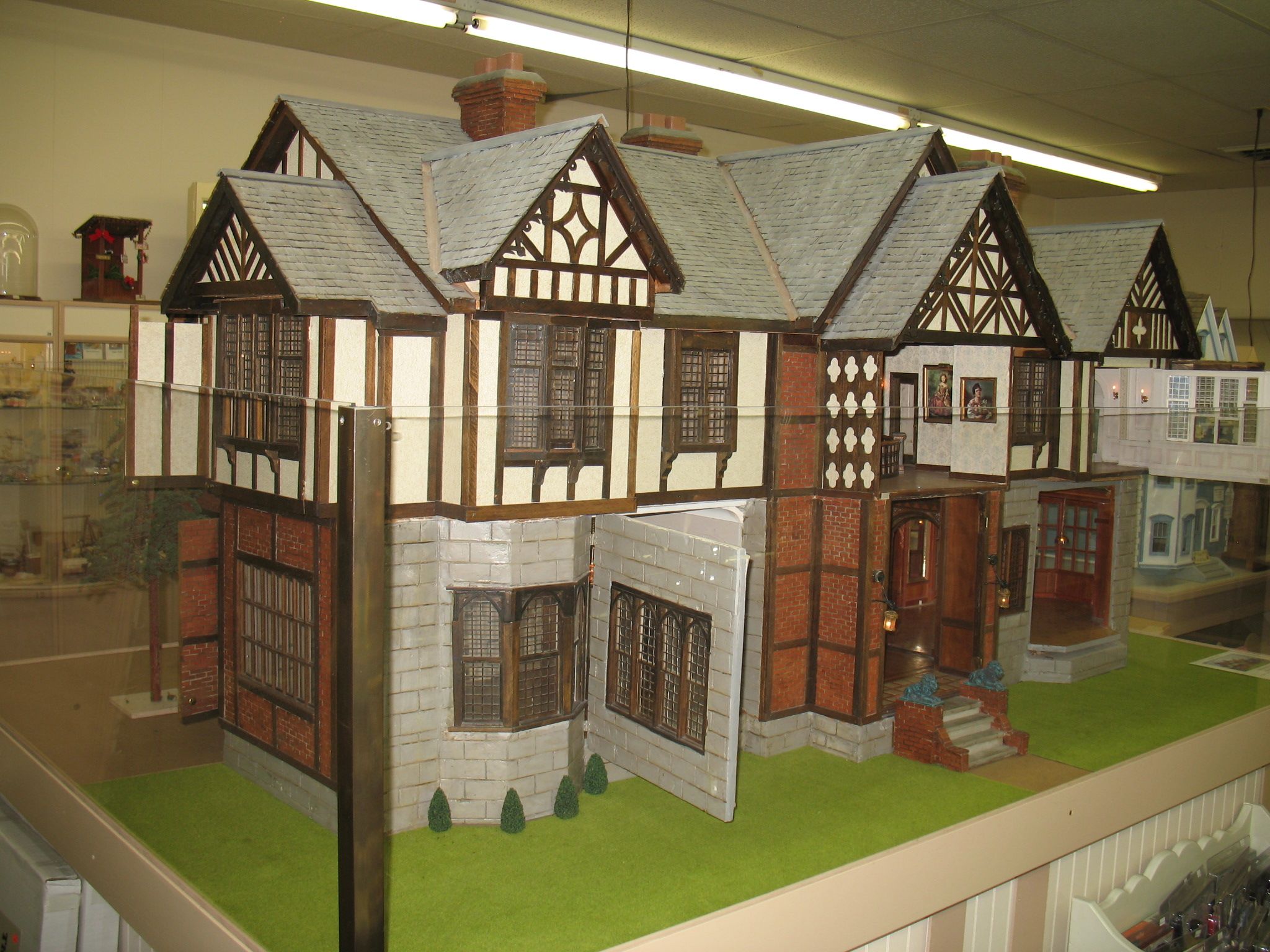
I spent some time this afternoon at one of the locations for our upcoming short film, Street Language. I am thinking of how this particular location, a miniature dollhouse shop, helps me introduce my main character and opening value of his journey. The opening value is a key piece of information you must give the audience; your protagonist’s journey depends on this starting point. Remember, a film is the story of a journey of change told through conflict, to quote a number of screenwriting gurus.

In our film I wanted a unique setting, something an audience won’t see every day, and something that gives me a visual way to establish aspects of my character’s mood, mission, etc. Playing against type a bit, I am placing Jacob, my Protagonist, in a miniature dollhouse shop. Jacob is a young man, and a street kid – not what you might think of as a dollhouse customer. But he works as a night janitor in the shop, which for him becomes a sort of refuge, a fantasy world of perfect homes. The opening value of my film is peace, found in this fantasy world, apart from normal human relationships. Jacob’s journey in the film is to discover the value of connecting with another person. At the beginning of the film he is isolated, alone, and unknown. By the end of our short film we must see him change, to open up in some way, or to close up further, if the story is a tragedy or dark vision of life.

So, today I’m storyboarding images that establish Jacob’s starting point – a peaceful fantasy world, isolated from real human relationships. I could have set the opening scenes in a warehouse, a deserted tenement, the desert, and accomplished something similar. But I like the visual choices and images that I can create in a miniatures shop. I hope the audience connects immediately and is intrigued to know and understand more about Jacob. In a short film I have to pull them in very quickly, so this is my plan.

You can learn more about the film – and even be a part of our team: Click here for our Our IndieGoGo campaign

Write Beyond The Screen

With our film, Street Language, I’ve been learning to take advantage of the opportunities that the web and other technologies present to extend the storytelling beyond the confines of the short film I’ve written.

When you write a screenplay you are creating a world in your mind that is rich and complex, full of both familiar and extraordinary characters, places, and action. But, as a screenwriter you must be incredibly disciplined to filter all of that complexity and richness down to the essential pieces that are needed to tell your story in within the brief, linear, constraints of the film medium. This is especially challenging with short films.

With our film, Street Language, I’ve been learning to take advantage of the opportunities that the web and other technologies present to extend the storytelling beyond the confines of the short film I’ve written. In a nutshell, I’m giving my audience new ways to learn about characters, follow their lives outside of the film, and connect with the themes of the film in ways that can affect the real world. I want to blur the line between fiction and reality in a way that has the potential to create change in the lives of my audience and their world in positive ways.

Street Language is our first attempt at multi-channel transmedia storytelling. We’re beginning small, with a few alternate channels where interested viewers can explore characters and themes of the film in more depth. For instance, we are creating social media presences for our two main characters that will give backstory and a timeline leading up to the events in the film. One character’s story arc before the film begins is quite interesting. It’s a trajectory that we can tell through common social media tools. So part of the release of the film will be creating linkages to social media channels where audiences can discover this deeper story.

Also, we can create a bridge between the fictional and real world in which our story takes place. Our film is set in an urban center, with our main character a street kid who lives alone in a ‘squat’ he has found for himself. With our non-profit partner organizations, we can connect audiences to real-world situations and people to help them further explore themes in the film. Most importantly, we want to help audiences engage in meaningful ways after they view the film. If anything, we see the film and the extended media story world as being entertaining catalysts to help viewers become part of change on behalf of the urban poor, homeless, and disenfranchised people in their communities.

Here are some bullets that capture the essence of what I’m saying:

• Multiple delivery channels give a screen writer the opportunity to communicate beyond the script and the linear, set, format of a film. These channels include social media, mobile devices, web sites, games, motion comics, etc.
• In my screenplay I often want to leave information out to help create interest, suspense, or to more deeply engage my audience’s mind. However, I can take advantage of different delivery channels to fill in gaps and fill out the world of my characters.
• If you are writing for film today I believe you must, at the very least, learn about transmedia, augmented reality, and other trends that are fully entrenched in the commercial film franchise world. In Hollywood, a screenwriter may create the script alone, but the additional story elements (mostly marketing-driven) are usually controlled by outside hired guns. In the independent film world, I think writers should create and control the story world of their characters beyond the film element. Those who write for multi-channel story delivery are truly transmedia storytellers.
• My personal goal is to learn and grow in this area so that I can continue to be the driving force in the creative story elements that accompany my films. I’m not saying that I’ll become an expert in game theory, social media storytelling, and all of the other ways we can work. I’m saying that I want to be fluent and competent enough to facilitate a team of experts from other disciplines who can collaborate to develop a full expression of our story world.
• I do believe that there will remain a place for simple, linear storytelling. We all like to be entertained and not work at it so much. However, I wonder whether that will become a smaller and smaller part of the visual storytelling world.
• This does not necessarily mean movies will turn into games where the audience ‘controls’ the world. People are trying to envision and execute this sort of new form of storytelling, where the audience is fully immersed as a character in the ‘narrative.’ However, there will be a place for well-told and structured stories. What I’m talking about is expanding the storytelling space beyond the screen.

I’d be interested to hear your thoughts and experiences about expanding the storytelling space.
Filmmakers working together to open hearts

I posted a little while ago about a short film project called “Street Language” that we are producing here in Denver in the next couple of months.

I posted a little while ago about a short film project called “Street Language” that we are producing here in Denver in the next couple of months. We just launched our IndieGoGo campaign to raise a little money for the project. Most of the funds are coming from in-kind contributions by our professional and student crew members, community partners, and others who believe in the project.

Click the image, or HERE to see the campaign on IndieGoGo.

Really, it’s more than a film project. We are adding in transmedia elements like deeper storytelling pieces on social media, development of other resources for use by non-profits who will use the film later, etc.

If you read this, check out the campaign and please share it with your friends!

Non-Professional Actors?

…I am looking for that spark of un-self conscious truth in their voice, their eyes, their body-language.

I’m in the process of casting for “Street Language“, a short film project I’ve written. It’s a no/low budget project meant to serve as a mentoring experience for emerging filmmakers here in Denver. The final film will be made available to non-profits who work in urban areas with at-risk youth, the homeless, and other disenfranchised communities.

As we’ve been auditioning actors for the two lead roles I have been wrestling with my priorities. At the level we’re seeing (and paying), of course, their experience is limited. Some have had mostly school theater experience, perhaps a few student films or community theater. They are budding, but not fully blossomed yet. So I, as a Director, must look deep to see their potential.

In working with non-professional or less-experienced actors a wise friend, Christopher Bessette, told me he looks for moments of truth. We have the advantage stage directors don’t have; we can edit. An actor may not be able to carry a continuous scene with complete truthfulness and realism. However, we can see the truthfulness of a performance in a certain look, a single line delivered without self-consciousness or ‘acting’.

When I was editing our last feature, The Enemy God, I spent much of my time matching performances over several takes between actors who had never acted before – they were indigenous Kekchi Maya people from the jungle. In the end I heard comments in screenings of the film about how great the acting was. If you looked at raw takes, you would be discouraged. Indeed, some of our crew members commented that we weren’t getting anything worth using. One of those same crew members, our DP, was floored when he saw the finished film. “That wasn’t what I saw!” He was convinced because, in the editing process, we found the moments of truth in a rough performance by novice actors. I don’t recommend merely saying “We’ll fix it in post.” but sometimes there is truth to that phrase.

When I’m casting, I am looking for that spark of un-self conscious truth in their voice, their eyes, their body-language. If I see that, I can have more confidence that I can draw out a performance that will bring out a truthful story from an actor who is giving us their passion and commitment but may not have the acting experience.

What Will It Take To Open Your Heart?

“Street Language” is a short film, now in pre-production.

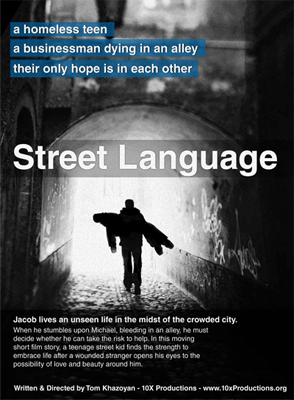
A homeless teen and a businessman dying in an alley; their only hope is each other in Street Language.

Jacob lives an unseen life in the midst of the crowded city. When he stumbles upon Michael, bleeding in an alley, he must decide whether he can take the risk to help. In this moving short film story, a teenage street kid finds the strength to open up his life after a wounded stranger opens his eyes to the possibility of love and beauty around him.

Their journey together opens up both of their lives to the possibility of love and hope for the future.

We’re in pre-production on this short film here in Denver. I wrote the script and will direct the film. Chloe Anderson, of Epicenter Pictures, is producing the project as part our shared mission to mentor emerging filmmakers. Our crew consists of some seasoned professionals as well as students who want to hone their craft.

We plan to make the film available to other non-profit organizations who deal with issues of homelessness, hopelessness, and teens-at-risk.