viaRenovo – a way worth taking

I was intrigued by several articles on this site today. Check out the new post by Ron Reed: A&F 100: Spiritually Significant Films. How many of these are on your list of influential and significant films? What impact do films like these make on the spiritual conversations of our cultures?

There are many more insightful posts and links on viaRenovo. Here’s  the point:

viaRenovo is committed to seeing the world through redemptive eyes, seeking to join with God in his restoration of all things through the power of the gospel and His transformative grace.

Visit the site: viaRenovo

“Avatar is real” say tribal people « The Enemy God – The Movie

An immersive visual feast? Pantheistic drivel? Box-office champ? No matter what you think of the film, some audiences are relating more strongly because of their own history with those searching for wealth in their homelands. Here’s a post from our film blog.

“Avatar is real” say tribal people « The Enemy God – The Movie


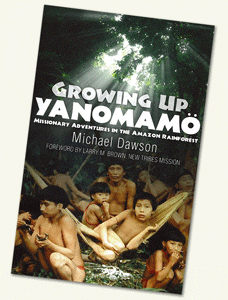
Book of the Year nominee: Growing Up Yanomamö

“… a bit of Huck Finn, with an Amazon twist.” says Simon Romero, Andean Bureau Chief, The New York Times

We’re excited to hear that a good friend’s book has been nominated as Book of the Year by the Christian Small Publishers Association. Mike is one of the Executive Producers of our film, The Enemy God. He was born and raised with the Yanomamö in the rainforest of Venezuela. His stories are funny, insightful, and challenging.

“… a bit of Huck Finn, with an Amazon twist.says Simon Romero, Andean Bureau Chief, The New York Times

Growing Up Yanomamö
Growing Up Yanomamö

Growing Up Yanomamo: Missionary Adventures in the Amazon Rainforest, by Mike Dawson (Grace Acres Press), is nominated in the Non-Fiction Biography category. Mike’s book is a finalist, but needs votes from the public to win; simply click and vote. The Book of the Year Award program from the Christian Small Publishers Association can be found at http://www.christianpublishers.net/10votes/.

You can order also the book on our web site at 10X Productions.

Your help in spreading the word to others would be wonderful. Thank you!!

How Can Games Speak To Us?

I believe that visual storytelling is about entertainment, but not merely entertainment when it reaches its highest level. I want to tells stories that open audiences’ eyes and hearts.

In my on-going ponderings about visual storytelling, I really believe that I’ll be working on video games in the future – even though I’m a filmmaker by trade.

My son is a budding game developer and we have discussions all the time about the place of storytelling in games. I challenge him to think in terms that are beyond the current state-of-the-art. What could be done in terms of meaning and cultural influence in a game? I have a friend in the major game world who says the development studios are looking to Hollywood for screenwriters who can help them amp up the characters and story arcs of their games. If you read reviews of games like Mass Effect 2, you know that there is a real effort being made in some games to create more depth and nuance beyond a few cut scenes that move a player through to the next battle.

Mass Effect 2

However, when I think story and when my son talks about story in games, there is still a wide difference. Mass Effect 2, for instance, uses a dialogue wheel to give a sense of choice and independence to conversations, but you don’t mistake the game for anything written by Robert Towne.

When will we get there?

Chris Remo talks about it in this article.

If you’re reading this, you probably love games. I certainly do, but I’ve been thinking about what makes games important to me, versus what makes books or music or film important to me.

… there are still some parts of my life that games don’t address that well. They do the “fun” thing well, and they give me a lot to think about, but they rarely speak to me the same way a wonderful novel, film, or album does.

…the reason I bring this up is because I think games are certainly capable of more. I think games have the possibility of speaking to us as people, not just as gamers, in the same way a film by Scorsese or Bergman or Welles or Kurosawa or the Coen brothers can speak to us as people, not just as film buffs; in the same way The Beatles or Beethoven or Charles Mingus or the Flaming Lips or John Adams speak to us as people, not just as analysts of music theory; in the same way Vonnegut or Nabokov or Shakespeare or Orwell or Hammett speak to us as people, not just as appreciators of literary prowess.

[Read the entire post from IdleThumbs]

I believe that visual storytelling is about entertainment, but not merely entertainment when it reaches its highest level. I want to make films, and perhaps games, that open audiences’ eyes and hearts. When the master storyteller, Jesus, explained why he told stories he said, “…to nudge people toward receptive insight.” When I think about the potential of games, with open worlds and personal participation in the story, I am excited to see what’s possible.

“Blockbusting” – Must-read book for filmmakers

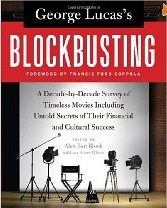
Just from the cover you sense the significance. George Lucas, Francis Ford Coppola, Stephen Spielberg, Martin Scorsese, Walter Murch, Ron Howard, and Sid Ganis all have their names and/or blurbs on the cover.

Just from the cover you sense the significance. George Lucas, Francis Ford Coppola, Stephen Spielberg, Martin Scorsese, Walter Murch, Ron Howard, and Sid Ganis all have their names and/or blurbs on the cover. It’s called George Lucas’s Blockbusting, and if you are a filmmaker or film fan, I’d recommend this book as one that you must have and must read.

Bockbusting: A decade-by-decade survey of timeless movies including untold secrets of their financial and cultural success.

I discovered this book as I was browsing at new releases in a local bookstore and I’m surprised I hadn’t heard of it yet. But, as I’m writing, Amazon doesn’t yet have it in stock.

As the tag says, the book takes a look at the movie business, centered in Hollywood, from a variety of perspectives. It begins with a listing of the Top 300 films by Domestic Box Office between 1910 and 2005. The list is adjusted for inflation to 2005 dollars so you get a clearer picture of success relative through the decades. Based primarily on this list, the book takes you through the movie business beginning with the invention of the motion picture and disputes over patents in the early 1900’s.

In each decade, the most important films are featured in brief synopses that include background on how the films were made and how they were received, as well as their statistics like production budget, # days of principal photography, key credits and locations, and box office revenues. The films highlighted for each decade are include films that are not in the all time Top 300 domestic grossing films, but also include films from that decade that are significant for other reasons. Each film has a story behind it that is fascinating to hear – the intrigues behind the financing, studio squabbles over stars, reticent directors and writers.

If you’ve seen collections of film synopses before, this is not entirely new. However, packed into this book are articles and tables that give a hundred other ways to consider films, their success, and their cultural impact. For instance, there are salary comparisons for top actors and directors, again adjusted for inflation in each decade. They even throw in a table that shows average income tax rates for different eras. That way you can tell whether Spencer Tracy was doing well vs Will Smith in his day. Want to compare how movie franchises fare? There are charts for series like Indiana Jones, Batman, Die Hard, Back To The Future, and Lethal Weapon that track production cost versus box office grosses across the years of each franchise. Want to know average weekly movie attendance and how it compares across the decades, and compare movie ticket prices adjusted for inflation? Those charts are there as well. The book gives a good mix of story and statistics.

There are hundreds of articles that go well beyond the charts and numbers. These tell the story of how the film business began and has been changing through the decades. From the early days of the Motion Picture Patent Company, to the rise and fall of the great studio system (and where the pieces remain), to current trends in distribution, you’ll get more angles on the business side of the movies than you’ve ever seen between two covers.

This book sits on my coffee table and I pick it up several times a week to just browse and learn something new about the business I’m in. Highly Recommend.


Haiti and Pat Robertson

Why do we feel so compelled to pronounce God’s judgement on others?

Having been on the receiving end of judgement from my brothers on a few occasions, red flags go up for me when I hear people taking it upon themselves to speak for God. While I dislike to get into criticism of my brothers, I thought this blog post was worth passing on.

Haiti and Anti-Evangelist Pat Robertson’s ‘Gospel’ of Disgrace – Jarrod McKenna – God’s Politics Blog.

Why do we feel so compelled to pronounce God’s judgement on others?